
The five D-Day landing beaches
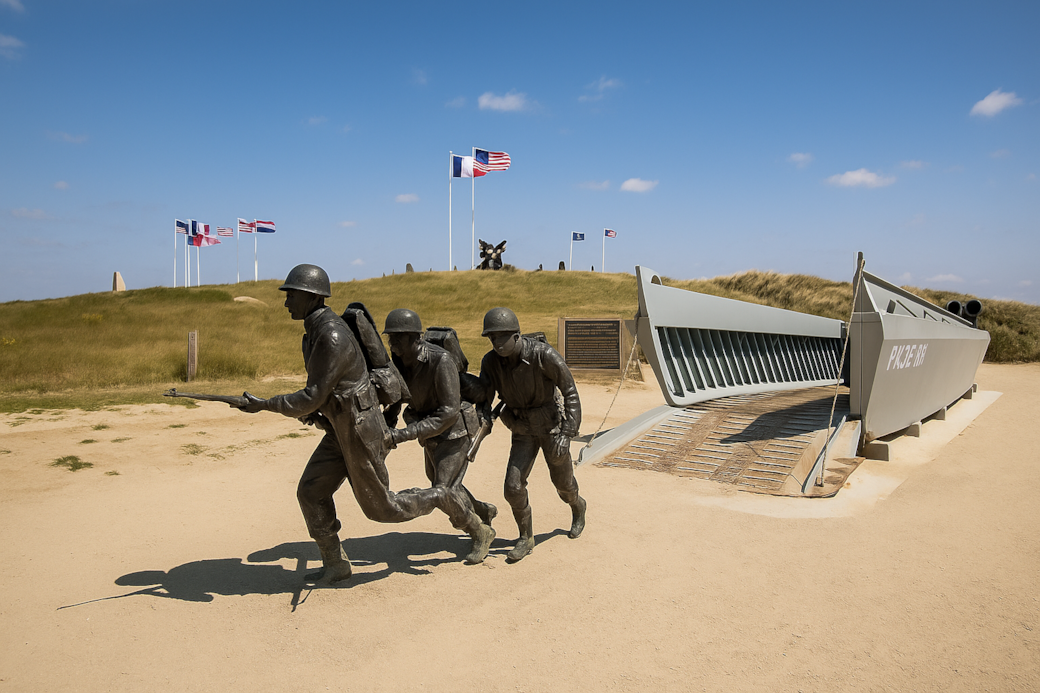
The D-Day landing beaches stand as powerful witnesses to the military operation of June 6, 1944 — a pivotal moment in World War II. Stretching along the Normandy coastline, these shores saw the arrival of Allied troops who came to liberate Europe from Nazi occupation.
Each beach bears its own name and story: Gold Beach, Juno Beach, Sword Beach, Omaha Beach and Utah Beach.
Arromanches and its historic artificial harbor
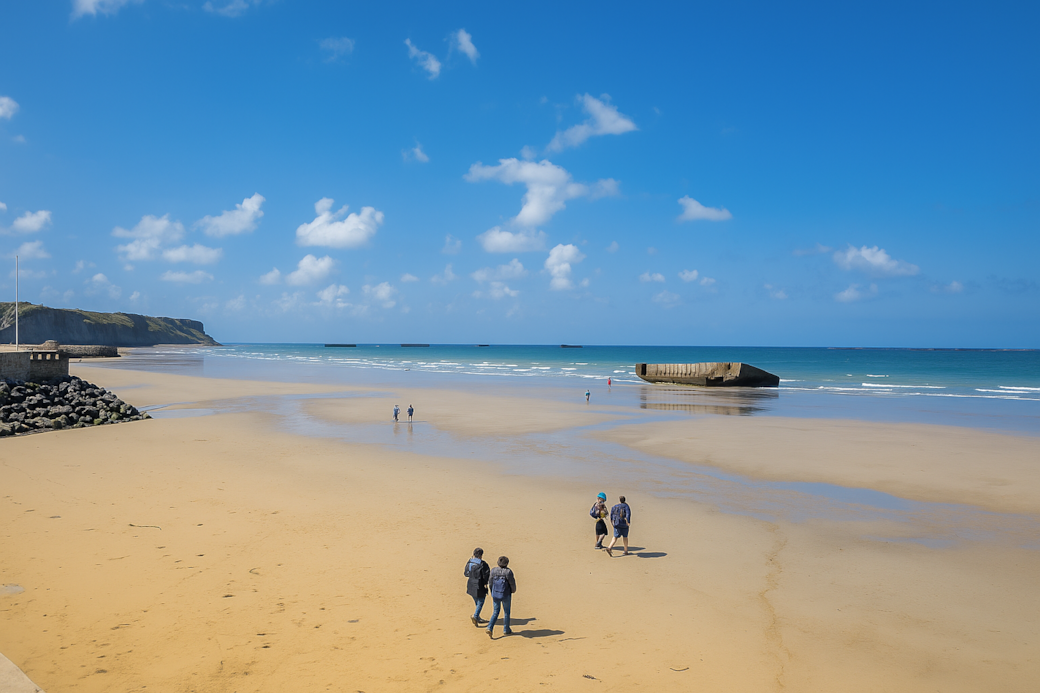
Arromanches (Gold Beach) is famous for the Mulberry artificial harbor, built by the Allies to supply troops after the D-Day landings. This small Normandy village, still shaped by its wartime past, is home to a dedicated museum that explains this remarkable engineering feat.
Remains of the harbor are still visible from the beach, a powerful reminder of the ingenuity of the Allied engineers.
Juno Beach: the Canadian landing beach
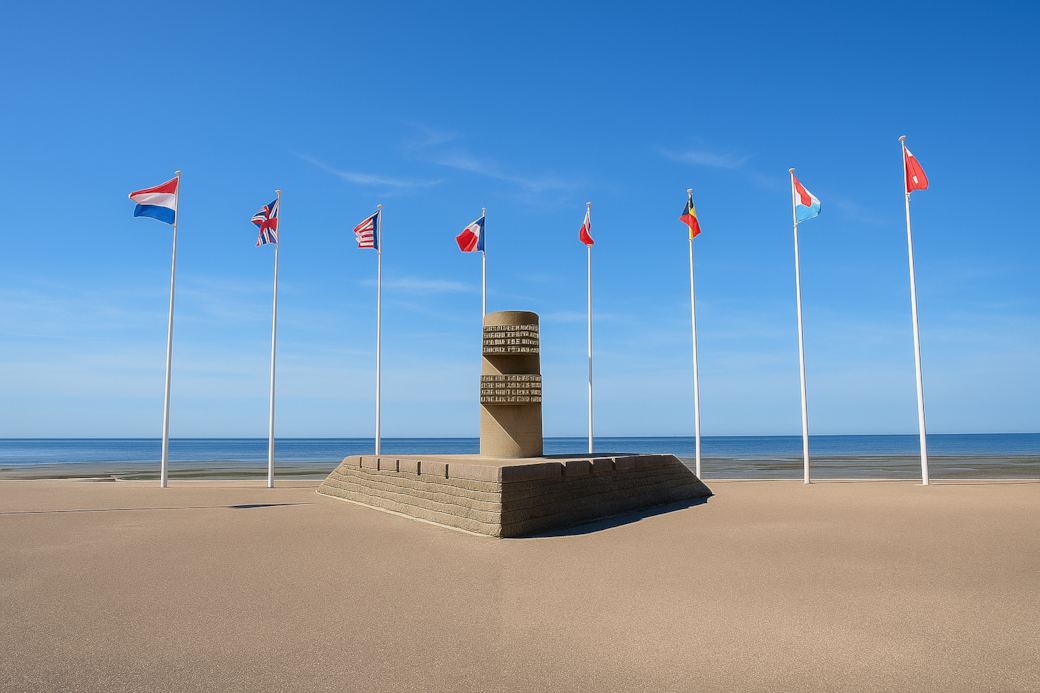
Juno Beach was one of the sectors where Canadian forces landed on D-Day. This beach symbolizes the courage and determination of the Canadian soldiers who faced heavy German defenses.
Today, Juno Beach is home to an interpretation center that retraces the events of the landings and honors the memory of those who fought there.
Sword Beach: a key front of the British invasion
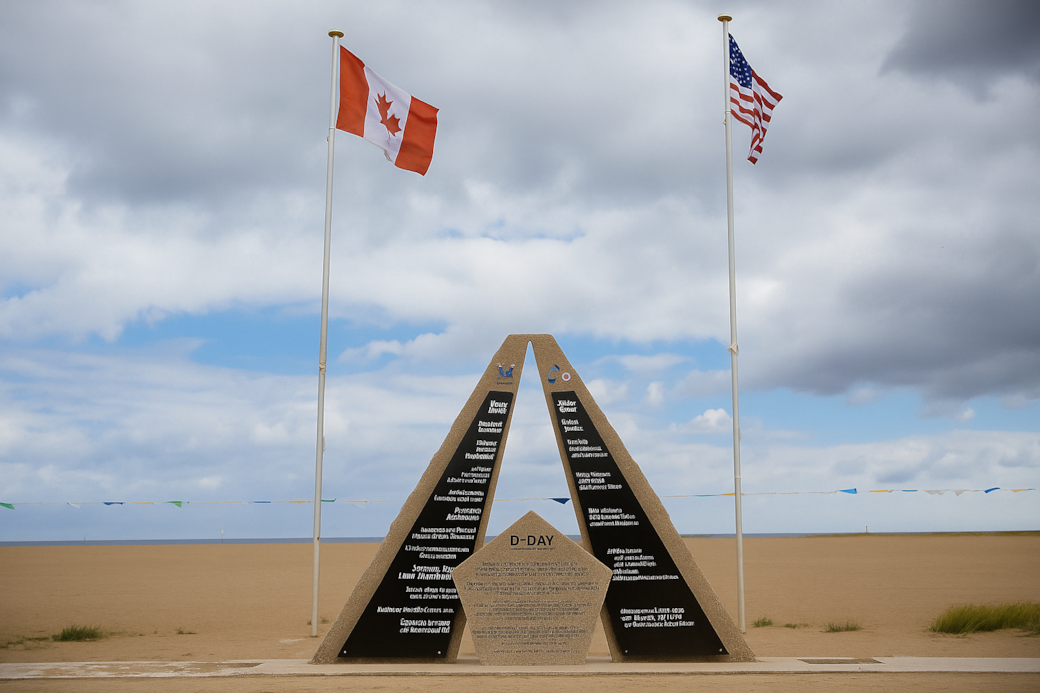
Sword Beach is the landing site where British troops came ashore on D-Day. It is also known for the fierce fighting that followed, particularly the battle for the city of Caen.
Several nearby memorials and museums recount this crucial phase of the Battle of Normandy.
Omaha and Utah: the beaches of American courage
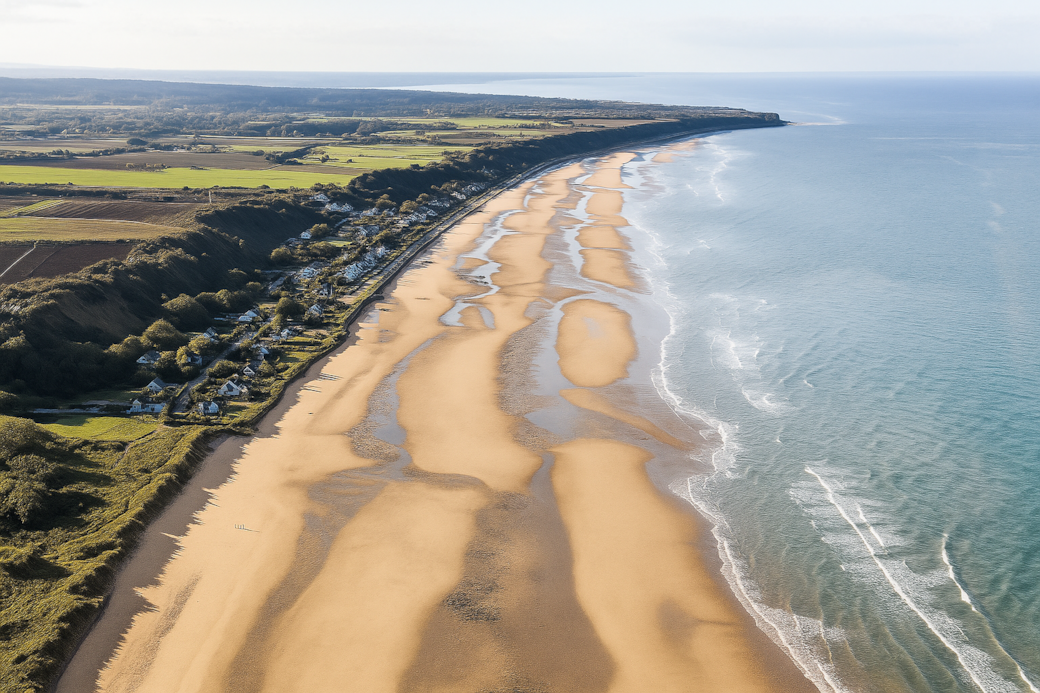
Omaha Beach is sadly known for the heavy casualties suffered by American soldiers. It was one of the most difficult sectors to secure but played a crucial role in the success of the D-Day landings.
Further west, Utah Beach also saw the arrival of American forces, marked by intense fighting and a swift advance inland.